

Curabitur Interdu
Finibuselit Viverra Finib
Jane Doe | April 12, 2022 | 4 Comments
Lorem ipsum dolor sit amet, consectetur adipiscing elit. Vestibulum quis nibh sed lorem eleifend rutrum id et leo. Pellentesque vel fermentum elit, et pulvinar diam. Suspendisse lacus nisl, rutrum ac enim vitae, euismod maximus erat. Praesent varius sollicitudin sem, consectetur maximus turpis pulvinar non. Suspendisse potenti. Etiam fringilla nulla sed pellentesque eleifend. Fusce elit nunc, tempor vel rhoncus at, lobortis et justo. Curabitur interdum augue finibus elit viverra finibus. Suspendisse potenti. Pellentesque habitant morbi tristique senectus et netus et malesuada fames ac turpis egestas. Vivamus sagittis tempor justo eget laoreet. Proin fringilla urna nec arcu suscipit interdum. Etiam vel felis lectus. Vivamus vitae luctus augue. Duis id laoreet libero. Nunc lobortis malesuada fermentum. Suspendisse malesuada congue hendrerit. Etiam vulputate sed nunc eu volutpat. Vivamus ut diam nibh.
Read our latest blogs
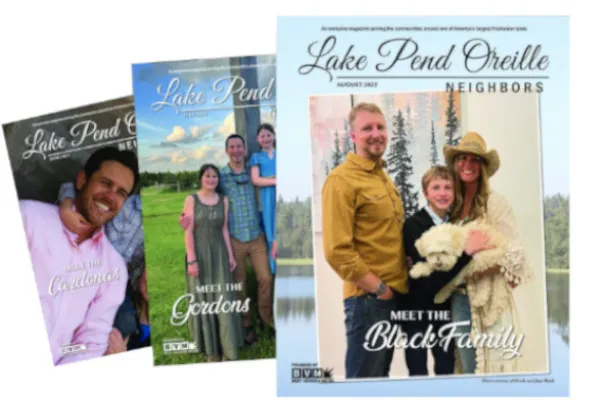
When Print Wins vs. When Digital Wins: A Media Practitioner’s View in 2025
When Print Wins vs. When Digital Wins: A Media Practitioner’s View in 2025
Its time to stop treating print and digital as rivals. They’re different tools for different jobs. Here’s the brutally honest breakdown I give clients every week.
Print Is Still Better When…
You need trust and perceived value A glossy postcard, or a well-designed local magazine feels permanent and legitimate in a way no push notification ever will. In skeptical or older demographics (35–65+), print still carries an authority that digital has never replicated.
You want geographic hyper-precision without creepy tracking Direct mail, doorknob bags, shared mail coupons (Valpak-style), and free local newspapers let you hit every mailbox in a 1 to 3 mile radius with zero cookies, zero ad blockers, and zero “this ad follows me everywhere” backlash.
You need to reach cord-cutters and ad-blocker users Roughly 40–50% of U.S. households now use ad blockers on desktop and mobile. Print sails right past that wall.
The experience itself is part of the marketing Luxury real estate, high-end salons, boutique fitness studios, private schools — anything that sells a premium lifestyle — benefits enormously from tactile, beautiful print (heavy stock, spot-UV, die-cuts, scented inserts, etc.).
You want longevity A well-placed free community magazine lives on coffee tables for 30–90 days. A Facebook boost disappears in hours.
Digital Is Still Better When…
You need speed, frequency, and retargeting A restaurant can push “$5 margaritas today only” to everyone within 3 miles who looked at Mexican food in the last week. Print can’t do that.
You’re on a tiny budget $200–$500 in hyper-local Facebook/Instagram or Nextdoor ads still outperforms most small print runs once you know what you’re doing.
You need measurable ROI down to the dollar Print can be tracked (QR codes, unique URLs, unique phone numbers, coupon redemption), but digital is still far superior for instant attribution.
Your audience is under 40 and mobile-first Gen Z and younger Millennials rarely check mailboxes for anything except packages.

The Big 2025 Surprise: Hyper-Local Print Is Having a Renaissance
What’s absolutely thriving right now (and shocking a lot of digital-native agencies) is neighborhood-scale print:
Glossy, ad-supported community magazines (e.g., “The Scout Guide,” “Suburban Life,” city-specific lifestyle books) — many are posting double-digit revenue growth year over year.
Doorknob bag networks and “clippable” shared mail packs in affluent suburbs.
Free weekly or bi-weekly newspapers thrown on driveways (especially in Sun Belt boom towns).
High-school sports programs, church bulletins, and community theater playbills — tiny but insanely effective because they’re kept and passed around.
Why it works in 2025:
Digital fatigue is real. People are exhausted by algorithmic feeds.
No algorithmic risk — your ad shows up 100% of the time in the zones you pay for.
Local advertisers (restaurants, dentists, remodelers, boutique retailers) are being choked by rising CPMs on Meta and Google. A full-page ad in a 20,000-circulation neighborhood magazine can cost less than a single week of decent digital reach in the same ZIP codes — and it performs better for brick-and-mortar traffic.
My Actual Recommendation to Clients in 2025
For almost every local business trying to own a specific neighborhood, the winning mix is 60–70% print / 30–40% digital:
Anchor with a beautiful, high-frequency print piece (monthly magazine ad, shared mail coupon, sponsored community newsletter).
Use digital surgically for urgency, retargeting people who visited your website, and capturing the under-40 crowd.
Put QR codes everywhere on the print so the two channels feed each other.
The neighborhoods where I see businesses absolutely dominate are the ones that stopped asking “print or digital?” and started asking “how do I make print and digital shake hands in the same ZIP code?”
Print isn’t back — it never really left for the jobs it was always best at. And right now, in hyper-local markets, it’s often the sharper tool once again.

When Print Wins vs. When Digital Wins: A Media Practitioner’s View in 2025
When Print Wins vs. When Digital Wins: A Media Practitioner’s View in 2025
Its time to stop treating print and digital as rivals. They’re different tools for different jobs. Here’s the brutally honest breakdown I give clients every week.
Print Is Still Better When…
You need trust and perceived value A glossy postcard, or a well-designed local magazine feels permanent and legitimate in a way no push notification ever will. In skeptical or older demographics (35–65+), print still carries an authority that digital has never replicated.
You want geographic hyper-precision without creepy tracking Direct mail, doorknob bags, shared mail coupons (Valpak-style), and free local newspapers let you hit every mailbox in a 1 to 3 mile radius with zero cookies, zero ad blockers, and zero “this ad follows me everywhere” backlash.
You need to reach cord-cutters and ad-blocker users Roughly 40–50% of U.S. households now use ad blockers on desktop and mobile. Print sails right past that wall.
The experience itself is part of the marketing Luxury real estate, high-end salons, boutique fitness studios, private schools — anything that sells a premium lifestyle — benefits enormously from tactile, beautiful print (heavy stock, spot-UV, die-cuts, scented inserts, etc.).
You want longevity A well-placed free community magazine lives on coffee tables for 30–90 days. A Facebook boost disappears in hours.
Digital Is Still Better When…
You need speed, frequency, and retargeting A restaurant can push “$5 margaritas today only” to everyone within 3 miles who looked at Mexican food in the last week. Print can’t do that.
You’re on a tiny budget $200–$500 in hyper-local Facebook/Instagram or Nextdoor ads still outperforms most small print runs once you know what you’re doing.
You need measurable ROI down to the dollar Print can be tracked (QR codes, unique URLs, unique phone numbers, coupon redemption), but digital is still far superior for instant attribution.
Your audience is under 40 and mobile-first Gen Z and younger Millennials rarely check mailboxes for anything except packages.
The Big 2025 Surprise: Hyper-Local Print Is Having a Renaissance
What’s absolutely thriving right now (and shocking a lot of digital-native agencies) is neighborhood-scale print:
Glossy, ad-supported community magazines (e.g., “The Scout Guide,” “Suburban Life,” city-specific lifestyle books) — many are posting double-digit revenue growth year over year.
Doorknob bag networks and “clippable” shared mail packs in affluent suburbs.
Free weekly or bi-weekly newspapers thrown on driveways (especially in Sun Belt boom towns).
High-school sports programs, church bulletins, and community theater playbills — tiny but insanely effective because they’re kept and passed around.
Why it works in 2025:
Digital fatigue is real. People are exhausted by algorithmic feeds.
No algorithmic risk — your ad shows up 100% of the time in the zones you pay for.
Local advertisers (restaurants, dentists, remodelers, boutique retailers) are being choked by rising CPMs on Meta and Google. A full-page ad in a 20,000-circulation neighborhood magazine can cost less than a single week of decent digital reach in the same ZIP codes — and it performs better for brick-and-mortar traffic.
My Actual Recommendation to Clients in 2025
For almost every local business trying to own a specific neighborhood, the winning mix is 60–70% print / 30–40% digital:
Anchor with a beautiful, high-frequency print piece (monthly magazine ad, shared mail coupon, sponsored community newsletter).
Use digital surgically for urgency, retargeting people who visited your website, and capturing the under-40 crowd.
Put QR codes everywhere on the print so the two channels feed each other.
The neighborhoods where I see businesses absolutely dominate are the ones that stopped asking “print or digital?” and started asking “how do I make print and digital shake hands in the same ZIP code?”
Print isn’t back — it never really left for the jobs it was always best at. And right now, in hyper-local markets, it’s often the sharper tool once again.

Contact
Legal & Compliance
© Copyright 2023-2025. Xaris Technology, Inc.. All rights reserved.
